My Improved Sunshine

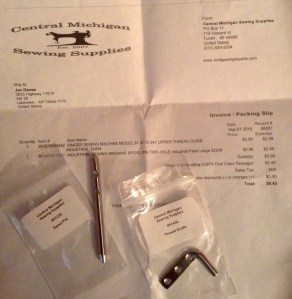
I am getting some fairly consistent stitching.  I needed a few more thread guides after moving the cone thread holder to the side of the machine. I ordered them online. You can see this is a pretty cheap fix. I ordered the spool pin because I wasn’t sure there are no burrs in the one we made that might cut thread. And the purpose for all this modification is to stop thread breakage and tame the thread.image


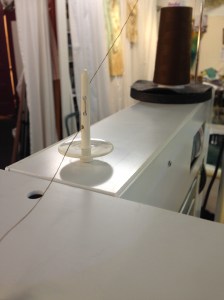
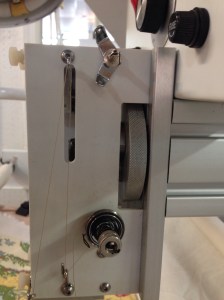
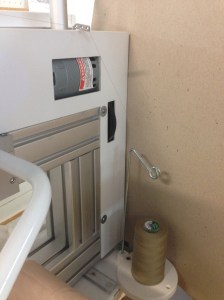
This shows the 3 hole thread guide mounted to the machine and where the cone thread stand is now located on the side. It is  bolted onto the carriage. We cut the arm shorter but can put a taller arm on with a taller cone of thread.
 

image

The main tension still was not holding a setting. So I reset the tension spring, you need a screwdriver and allen wrench to do this. There is a utube video on the Innova site that shows how to reset the tension spring. There is also information on the Tin Lizzie site about how to do it. All the Innova videos have been valuable helps. It is just outrageous that the manufacturer of my machine offers none of this kind of helpful information to their customers.

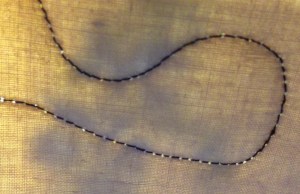
Here you can see a small sampling of both top and bottom stitching with the machine now.

I have been able to stitch in all directions without loosing tension. It is important to note that by adding the three hole tension and the 2 hole spool pin I have the flexibility of changing tension threading for different weights of thread. Threading through more holes creates more tension without changing the tension dial.

At least now I have options that were not there before.  Long arm quilting isn’t one-size-fits-all any more than quilting on a domestic machine  is.

Now back to the regularly scheduled program. I have quilting deadlines!
imageimage

How I Have Modified My Midarm #4

The machine was getting there. Now I had to address the weak tension in the pretension and the main tension. Carol Bryant, known as WyoCarol on some forums about this machine, was offering a fix she said was all that was needed to avoid broken threads. Her fix was to add larger tension discs from a donor machine to the pretension, as well as replacing the wimpy tension spring with the stronger one.  This by itself did not fix my machine’s tension problems.  It is a big help and remains part of the rebuild. Are you getting the gist ? There  are a lot of people out there who own this machine and can’t use it. With no factory or dealer support it is every man for himself and self help.

image

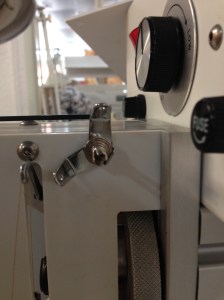
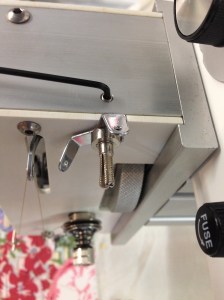
Something I saw on nearly every other machine was a bar in the threading line as it comes off the main tension. I had to fashion something that would work. I took a quilting bar that goes on an even feed foot and bent one end into a loop. This allowed me to attach it with a screw.  The thread now is totally away from the open space and can’t get caught around the flywheel.

Oh this is really going to work! image

How I Have Modified My Midarm #3

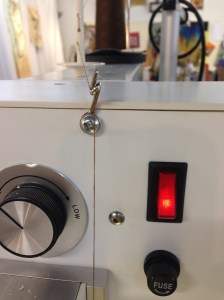
Now things are getting tricky. Nearly all other machines have some kind of 3 hole thread guide. Thread is wrapped through these to slow down the thread whiplash as it comes off the cone at high speeds. One kind is like a spool pin with holes in it. Since my local machine repair shop did not have any parts I needed I fashioned my own from a spool pin. Ron helped me drill holes to give this a try.  So far it is working.  This also meant I needed to reposition a thread guide to keep the thread off the sharp edge of the machine. Ron and the electric screw driver to the rescue again. I have ordered a metal spool pin made for commercial machines now that I know it is a good addition.

That thread cone on top of the machine just doesn’t feed correctly. The thread has to go way up and then down to the tensioners. When stitching you can see the thread whip around like a tree in a wind storm. I will be figuring out how to mount this on the side of the machine.

There are 2 more installments if you are following along.

Repositioned thread guide.

image

How I Have Modified My Midarm #2

Most long arms and mid arms have a pretension. This one is no exception. Right now this machine has the thread stand on top rather than on the side as most other machines do. This has caused issues with how the thread feeds off the top of the cone. The first thing I did was remove the mounted cone stand. It is cheaply made with no locking  mechanism to hold the cone steady. This allows the cone to wobble and not feed properly into the pretension. I have a new thread holder ordered but in the interim I put a heavy stand to the back of the machine.

Additionally, the eyes of the pretension were at an odd angle. That didn’t allow the thread from the top of the machine to feed evenly. I loosened the hex screw so I could reposition the eyes on the pretension. A problem this machine had was throwing thread into the flywheel space. It’s easy to see how this fix moved the thread further from the space.

Don’t go away, there is more coming in the next few days.

New position of eyes

image

Original position of pretension eyes.

How I Have Modified My Midarm Machine

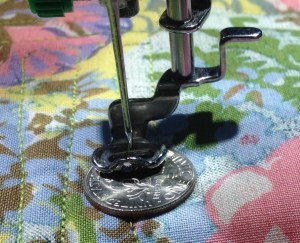
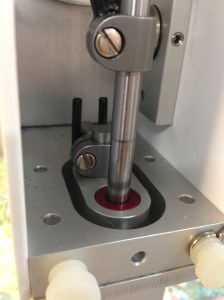
In pursuit of a good stitch I have had to make some modifications to my machine. I have spent days researching how other mid arms are threaded and adjusted.The manufacturer of my machine is notorious for being unresponsive to quilters who own this machine and who cannot stitch with it.  First up has been to set the needle bar to the correct height per other machines. I loosened the screw you see behind the red circle. Then I put a dime under the foot for correct height and tightened the screw again. Over the next few days I will post explanations of other “fixes”.

image

image