Eco Print Tee Shirts for Fall

DSCN0309DSCN0312

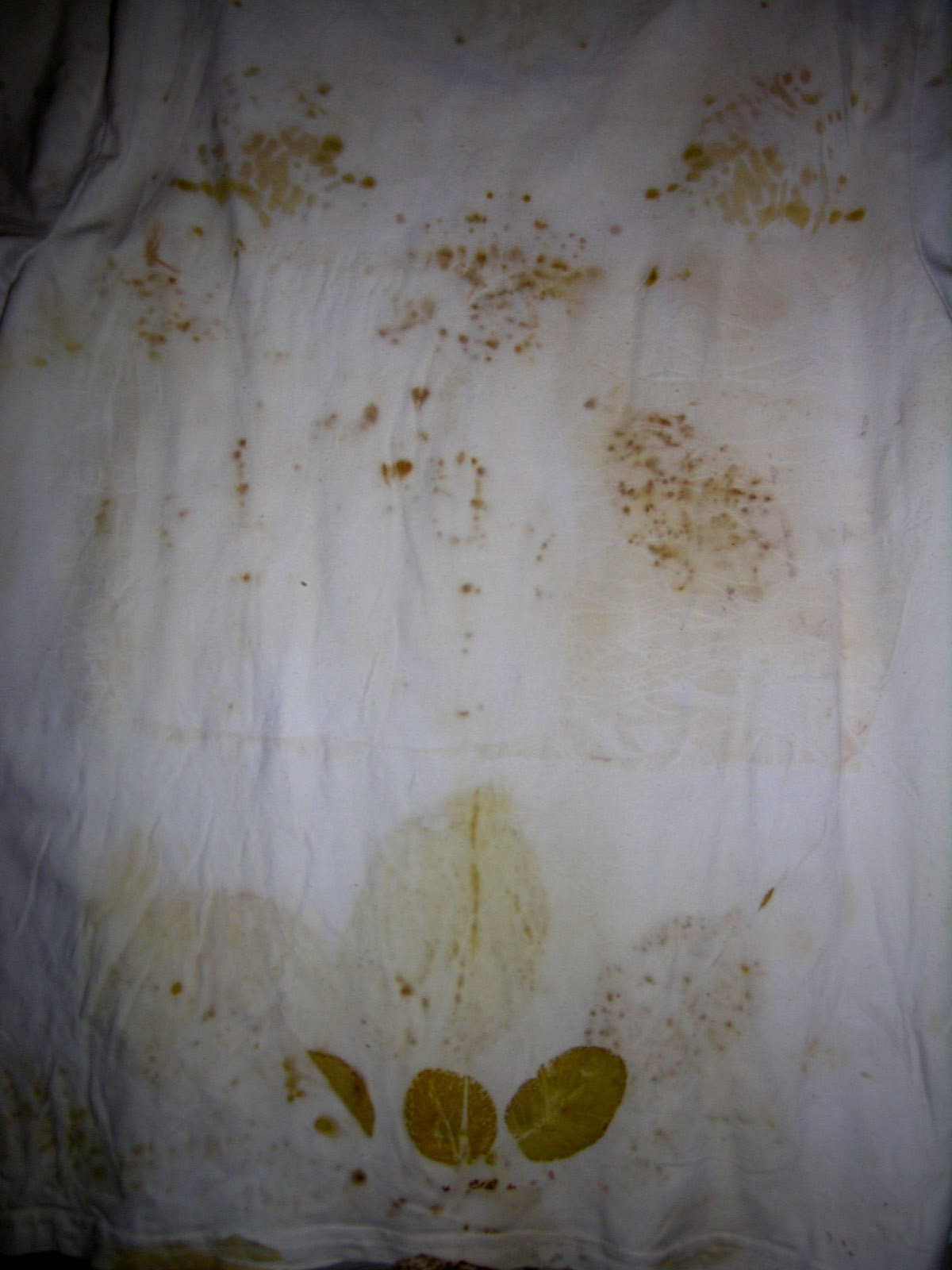
Ron and I have been printing scarves and such while we have good weather. I love this tee!  It is printed with dogwood, smoke bush and fern fronds.  A funny thing is happening with our prints. We weren’t thrilled with the results at first, pale and lack-luster. So I took a page from some literature on persimmon dyeing and plunged this in baking soda water. I got this amazing gold color.  Who knew!

The shirts and things we are doing will be for sale at the Art Odyssey Christmas sale at the library in November.  Well, unless they are sold sooner!

Here is another one that has the bundle marks on the back and the dogwood is much greener.

DSCN0310 DSCN0311

Little Pink Worm Undone

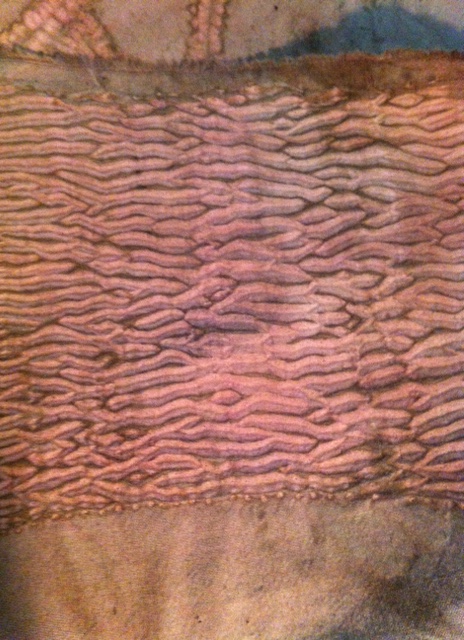
A small piece of the pink worm undone. I’ve not decided what I  will do with the whole piece so for now I will keep it under wraps.  I can say I am in love with it and it was totally worth the hours spent stitching the resists.

shibori walnut dyed

Little Pink Worm

The best kind of little pink worm is on the end of a hook enticing a fish to bite it’s dinner, so I can have dinner!  But that isn’t the kind this is…but it looks like some kind of wiggly pink something or other doesn’t it?  This is a piece of snow dyed fabric from last winter’s dye days that was less than stellar.  So I worked for hours and hours stitching and wrapping resist patterns into it. It is in a dye bath of very stinky old walnut dye right now. The photo is a little fuzzy [caterpillar?] but I’m hoping for good things when it’s dyed, dried and untied.

photo(2)

3rd Dip Day Persimmon Dye

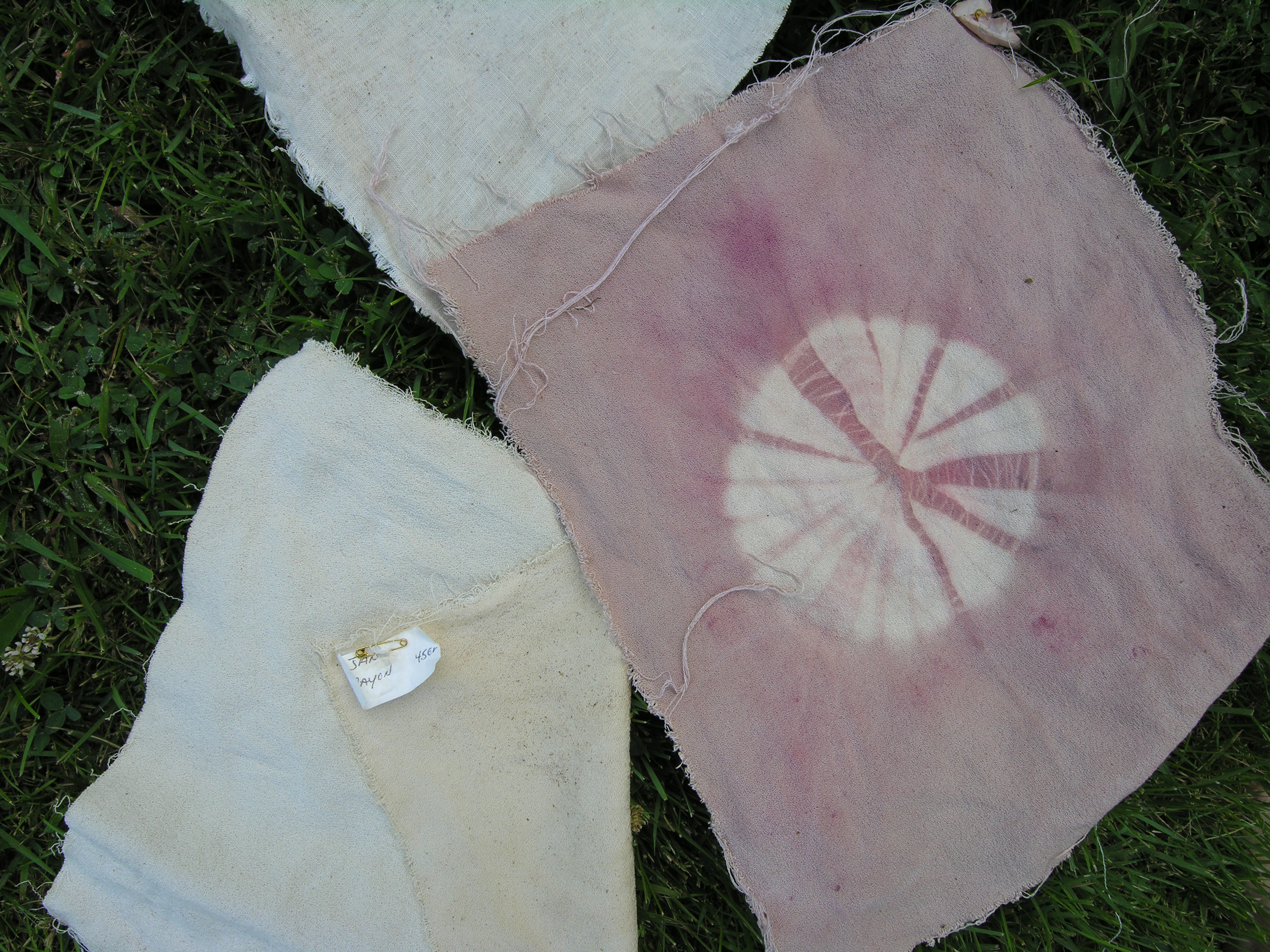
After 3 dips in 3 days, this is the color card for the green persimmon dye. You can see the original fabric was very white. The literature on using persimmons says it makes fabrics water resistant and can be painted onto paper or fiber bowls. It was difficult to make the fabric soak up the persimmon after the first day and you could see the moisture bead on the linen piece.  The dupioni silk piece didn’t react and there was very little color change on day 2 so I didn’t bother on day 3. The deepest change was on the rayon piece and I found that same thing using indigo. I’m thinking that rayon is going to be my fabric of choice.

We will pick persimmons again in a week or so, right before they start to turn color and see if that pick makes a difference. In the meantime, I have some experimenting to do with painting on the juice with and without mordants to see what comes out.  I also haven’t tried stitching through this yet so more experimenting.

persimmon dip3

Arkansas Astringent Persimmon Dye

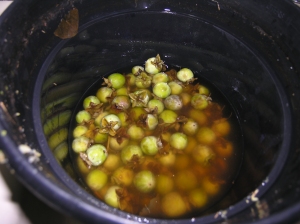
I discovered the information on using persimmon for dyeing over the winter last year. From my reading they need to be the astringent kind, not the sweet ones in the market…the ones that taste like straight alum and send your face into a pucker that lasts into next week. Yep…that’s the kind we have. I have waited patiently for the wild persimmon tree to set fruit. About a week and a half ago Ron and I picked a bucket full of green persimmons, this is when they have the most tannin in them.

They can be used as a tannin mordant and pre-mordant or with successive dips they give wonderful shades of burnt orange. The more dips and the longer it cures in the sun, the darker the color. Or that’s what we have read so we are experimenting.

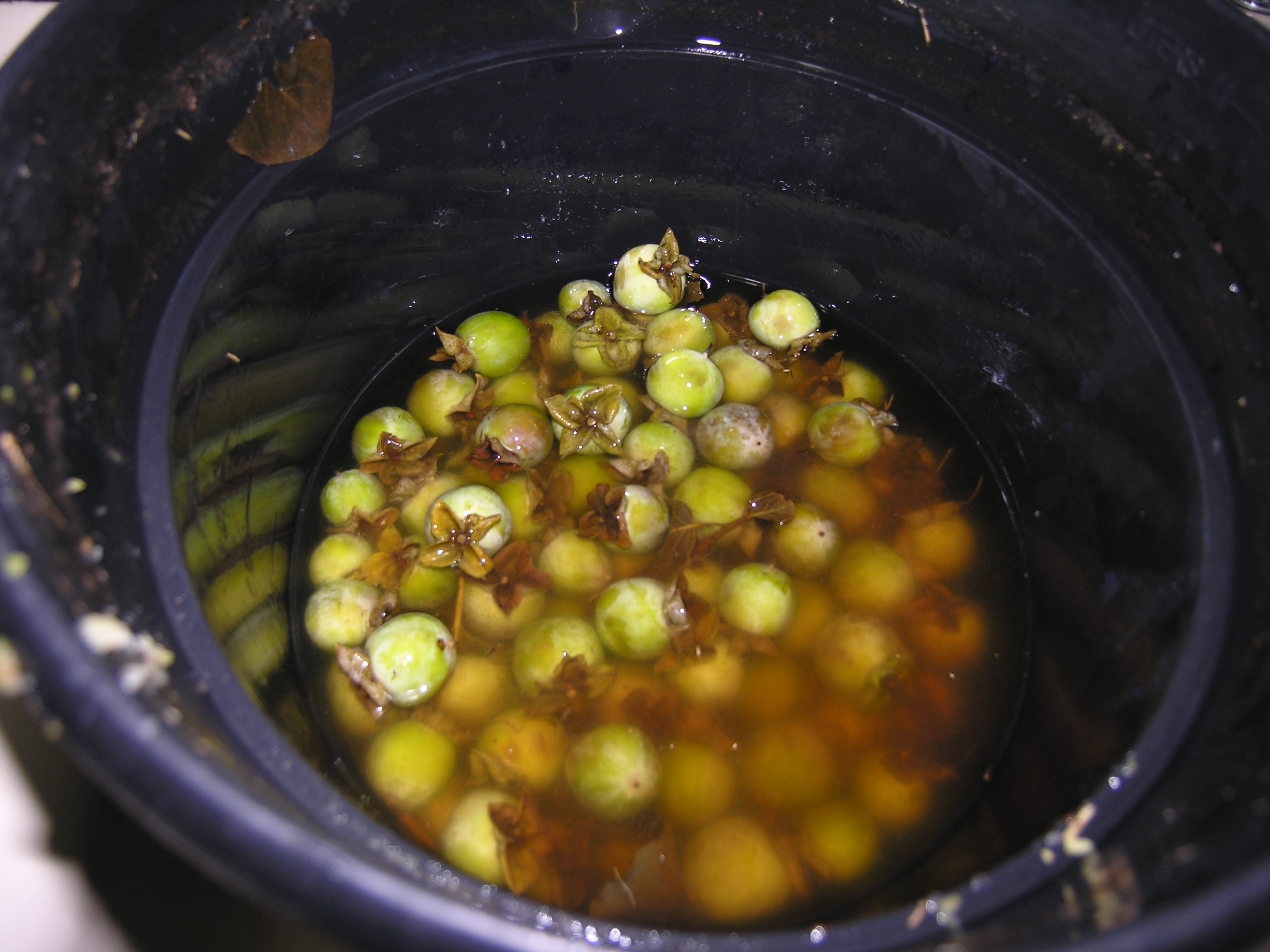
This is the photo of  some of the persimmons after soaking in a bucket for over a week. The water looks like Lake Okeechobee in Florida full of tannin.
persimmon soak 1week

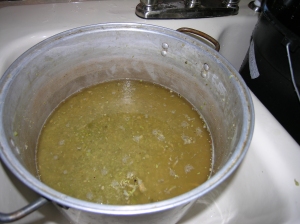
I used my Cuisinart Food Processor to grind these up. The Japanese textile blog I saw this on grates them to use them unfermented.

After soaking again overnight they more than doubled in volume. This pan was full to the top!
ground persimmon

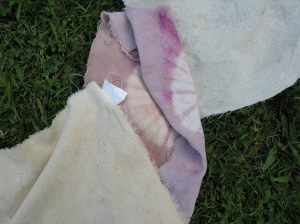
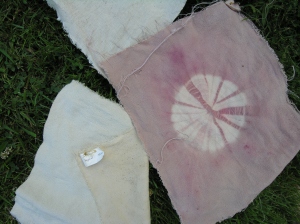
According to the information I’ve found on this, the cloth must be exposed to the sun and heat. Well, its pretty hot in Arkansas today so I had to try some cloth in the green goo. I used a piece of white handkerchief linen and a piece of white  rayon. Scoured, of course. The pink spiderweb shibori was a piece Ron did  at Arrowmont and was dyed in a madder exhaust. I soaked them in water first, then lay them on the top of the pot, not caring if some of the ground persimmon got on them.  I was shocked at how much color from a single dip and you can see the backside hasn’t been in the sun as long. I can’t wait to dip these again tomorrow . We are expecting 100 degrees so they should do well in the sun.
persimmon dye dip1 persimmon overdye1