A UFO Becoming

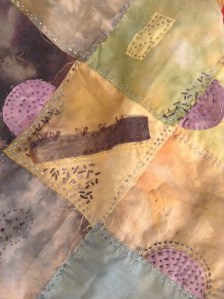
Left over scraps of moody hand dyed fabrics from my stash begged to become. Beginning stitches with hand dyed embroidery threads pieced them together but it lay hidden for a while waiting for rediscovery.

A bought with a nasty flu bug has kept me out of the studio with time for hand stitching.  The embroidery is nearing completion and then it will be intensely hand quilted.  It even told me its name but wants it to remain hidden until it says it is done.

image

image image

Rolling Along

A discussion on FB about ways to transport silk scarves to a show/sale sparked my imagination. I was going to use the standard pool noodle or pvc pipe to roll scarves on so they don’t get wrinkled.

Then I was sending a fabric order on Etsy and emptied a cardboard  bolt. It was a light bulb DUH moment.  Since I carry my inventory in vintage suitcases something flat would be perfect. So I got to work making my silk roll.

I covered the bolt with 2 layers of batting and then a layer of flannel. This is actually a flannel baby blanket with a roll hem. Simple.

I made certain to position the hem so it was in the middle of the bolt. This gives me something with some form to pin the scarves to with silk pins. Depending on the width of the scarf, I can roll 2 pieces side by side. I can continue to add layers of scarves, being careful to only anchor them on the bolt through the edge of the scarf. This also means my hang tags will lay flat and not get crinkled like they would on a pool noodle.

Works like a charm! img_0204img_0201img_0203

Silk Information for Dyeing and Printing

Information on Silk Fabrics – Types, Terms, Weaves,

Fabric Terms

There are many types of silks. Listed below are a few of the more popular ones found in the US. To assess a silk one needs to consider three factors. They are: Silk Type, Silk Weight, and Silk Weave. Silks of the same type might have different characteristics because of different weights or weaves.

Silk Fabric Description Weight
Broadcloth, Habotai same as China Silk except heavier; wrinkles less; good for shirts medium (10 mm) up
Chiffon a soft plain wave fabric made with twisted yarns Sheer – Light to Medium
China Silk, Fuji Silk Spun Silk, best for lining and crafts; inexpensive, often called washable silk, wrinkles 8 mm up (light)
Crepe de Chine Popular for clothing; lustrous fabric; superior drape; made from twisted yarns 14 mm popular but inferior; 16 mm is good blouse weight, heavier available
Organza plain weave; sheer silk made of tightly twisted, fine yarns; use for interfacing, veils, under gowns Crisp, Sheer
Charmeuse crepe backed satin; rich luster; drapes beautifully medium; 16 or higher
Pongee a variation of tussah; slight rib and texture; inexpensive light weight; traditional summer fabric
Brocade Jacquard design often with metallic thread, usually contains some rayon; good for jackets heavy
Taffeta hand woven is best; crisp fabric that rustles medium to heavy weight
Shantung slubbed silk, duppioni yarns many weights from light to suit
Velvet pile fabric often containing some rayon; gorgeous drape medium to heavy
Peu de Soie skin of silk; satiny face heavy
Damask jacquard woven silk of elaborate patterns light to medium
Noil (raw silk) spun silk with nubby texture; appearance of soft cotton or wool; easy care, wrinkle resistant; travel well medium to heavy
Tussah (wild silk) wild silk, generally from India, loosely woven heavy, nice for suiting
Washable Silk see: China Silk, Fuji Silk above
Silks are woven fabrics. Fabric weave helps determine such characteristics as strength and durability of the fabric as well as beauty. Since silk is so strong naturally, less durable weaves may be used to achieve a particular look not capable in other fabrics.

Weave Explanation Comment
Herringbone most durable; diagonal rib switch back and forth creating rows of parallel lines which slope in opposite directions often seen in noil silk suiting
Twill a dense fabric (double thread) with appearance of fine diagonal lines; very strong and soil resistant an expensive weave
Rib variation of plain weave in which the yarns in one direction are heavier than the other creating a rib effect a strong fabric weave
Plain yarns runs alternately over and under one another; most common weave appearance is changed by looseness of weave
Dobby made with a special loom that creates small, geometric figures usually expensive fabric
Jacquard intricate weaving creating complex designs in the fabric popular
Satin uses floating yarns to create the luster of a pearl; imitations and copies: shine; beautiful!. can snag easily
Leno open weave using twisted fibers weak weave

Term Definition
momme silk weight; a silk of 6 momme (mm) is very light; a silk of 22 mm is very heavy (suit weight);
sericin the gum that protects the fiber in its natural state
Spun Silk short silk threads that are spun together to form a longer filament; a lower quality silk often seen in the so called “washable silk” class
Raw Silk refers to spun silk that has been brushed to give a cotton effect; popular; easy care; inexpensive
Dupionni other related terms: dupion, douppioni, shantung; fabric containing slubs, uneven; forms when two silk worms make their cocoons at the same time thus joining together.
Washable Silk This is a term of recent creation. It normally refers to a light weight silk such as “China Silk” (see above) and is not considered suitable for outer garments. It lacks the qualities of a long filament silk. However, it is popular for artist who hand paint scarfs and clothing. (Note: most silks are generally considered washable.

Maybe it is Done

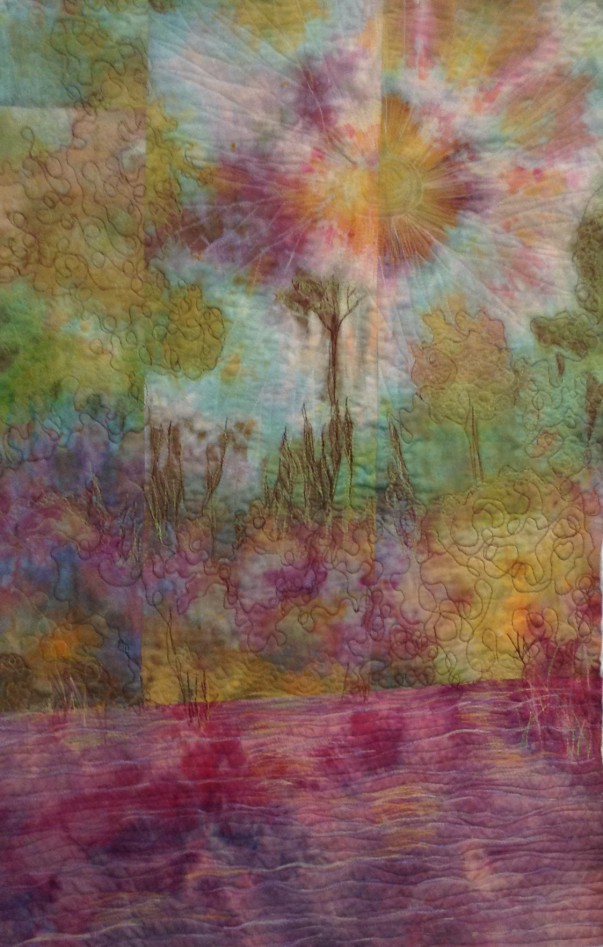
I have always been seduced by the cloth. I “see” shapes and images in swirls of color and rust. As a child I created my own alternate reality to entertain myself.

This was a narrow hand dyed cloth that was cut and stitched together. I saw the river and trees at sunrise. Is it a pieced art quilt now or is it a whole cloth quilt? You decide!

image