Native American Influence ATC

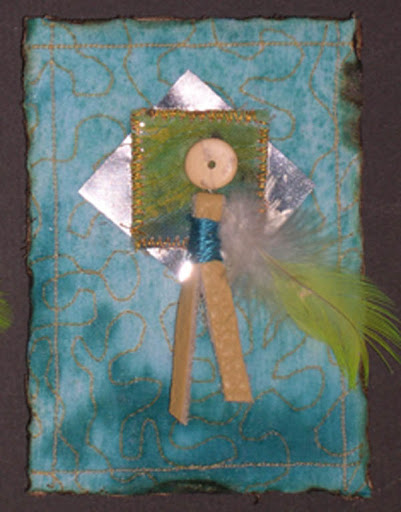
I’ve been out of commission for awhile with a health issue so this was my first trade since I could work again. Turquoise is probably my most favorite color, in all values and shades that the natural stone comes in.  It is a color that shows up in my quilts and paintings more than any other.

I have a large collection of Native American turquoise and sterling silver jewelry that I wear all the time and one piece is never enough.

I wanted these cards to mimic my favorite things and the original plan was to use silver wire and beads in them, but my hands weren’t cooperating to finish them the way I wanted to. The next best thing was to find some silver reflective window film to add the silver to my pieces.
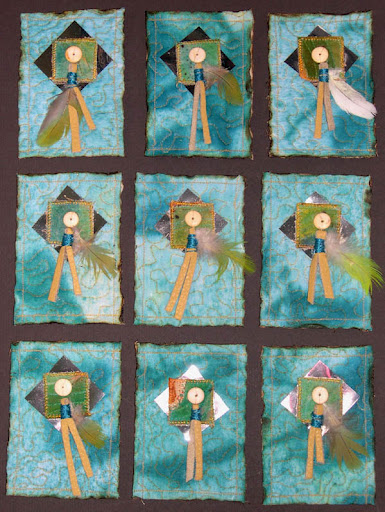
The background is some of my hand painted fabric that is quilted with gold thread. The inchie in the middle is cut from my SAQA donation quilt left over pieces.  Each one is adorned with a thin buckskin strip and tiny feather. The roundel is natural wood that I thought mimics bone beads.   Because these were quilted with poly batting, I was able to seal the edges by burning with a wood burning tool.

I hope you all like them. Oh yes, because Mathea lives in New Zealand there is one card without a feather. I would hate for it to be confiscated out of the mail!

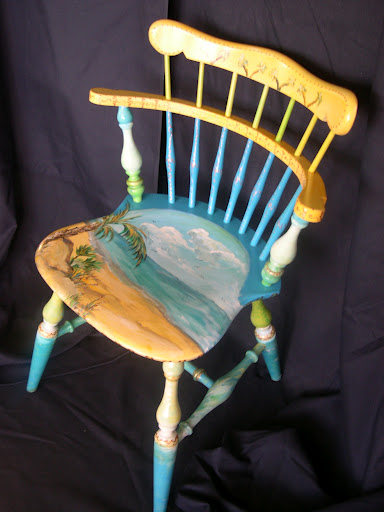
A chair for a Chairity auction and Tutorial

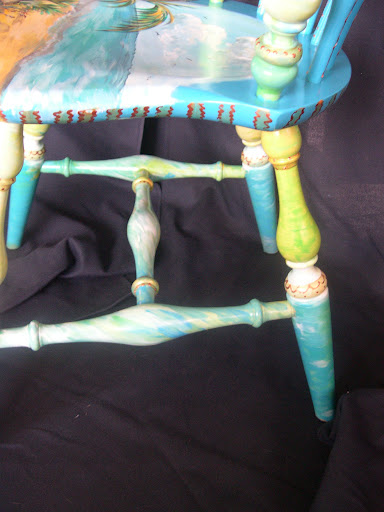
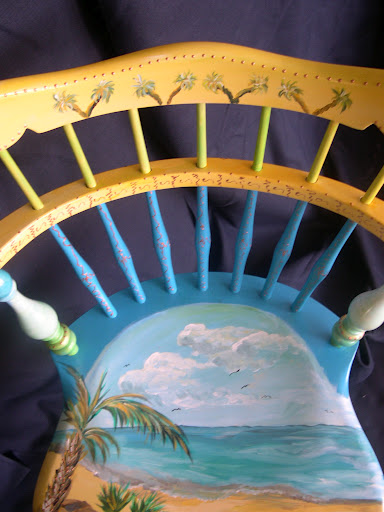
On the Quiltart mailing list, fellow artist Maggie Winfield http://funkydiva2cute.blogspot.com/  asked if anyone has experience painting furniture.  In my life before becoming physically disabled, I painted furniture. I sent her these photos of a piece I made for the battered women’s shelter fund raising auction in Sarasota, Florida. It really was a Chairity auction and all the artwork was upcycled chairs.

Here is the process I used for painting upcycled furniture.

1.  Wash the piece down with TSP [ trisodium phosphate]  while wearing gloves and following the directions on the box.  This will take off all the grease and dirt that may have accumulated and will even strip off any varnish that isn’t adhering. Do this outside or in a well ventilated area. Let the wood dry overnight


2. Prime the surface with Gesso. Don’t use house paint or acrylic gesso since these will make a plastic coating on the wood.  Old fashioned white wash housepaint had lead in it to make it durable but the modern paints don’t have this additive. If you have ever seen a house peel of acrylic paint you know what I mean about plastic coatings.

3.  I use Golden tube acrylics with along matte medium. I have also used Golden fluid acrylics.  Golden paints have a higher concentration of pigment molecules than  paint labeled as craft paint.  The reason you have to use multiple coats of craft paint is that they have fewer pigment molecules and are heavy on the medium extender. Golden or other high quality artist paints are more expensive, but save money and time in the long run.  Any paint marketed as a student paint is of lesser quality and you will have to use more paint. 

 4.  If you have the time, let the piece completely dry for 7-10 days.  If it is dry to the touch it may still have paint below the surface that is not dry. slow and steady wins the race. 

5.  I use a satin or low gloss varnish on furniture. I use artist quality varnishes because I know they will not change the colors or integrity of the painting beneath. Use thin coats and build up a surface.
6.  Just like the painted areas, the varnish must have the time to dry properly and cure for a durable finish. How the finished piece is going to be used determines how many coats of varnish are applied. After the coats of varnish are dry and cured, you may apply a coating of paste wax and buff it up for a nice final coat if you like. 

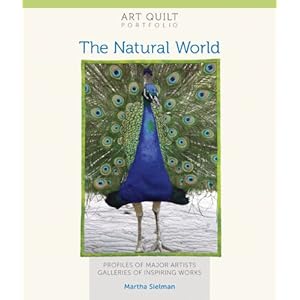
Art Quilt Portfolio The Natural World: Review

On a rainy, rainy day full of flash flood warnings, Ron went to check the furniture on the porch and found a paper envelope addressed to me. Fortunately only the envelope was wet and the contents were dry. This awful habit of our delivery services in the USA of just leaving packages without even a knock on the door could have been disastrous. Lucky me that this book to review was inside.

Martha Sielman did a masterful job of assembling a portfolio of artists who’s work portrays the natural world. The artists work with their own hand created cotton and silk cloth as well as readily available commercial fabrics. Some work 2-D and let  their treatment of the image give it dimension, while others like Melani Kane Brewer add wires, sculpted fabric and threads for a 3-D effect.

The questions Martha posed to the artists in the interviews helped them open a window into their creative process.  It is interesting to note that many of the photographs were taken by the quilt artists rather than professional photographers.  The quality of this book as an art book  is unquestionable. However, the press release enclosed made me scratch my head because of statements like “….themes that quilters love best” and “Quilters will find this inspirational compilation a must-have.” I didn’t feel that the person writing the press release understood that this is an art book and not a book about making traditional quilts. Just my opinion.

The book has some emphasis on how the artists integrate computer use and digital imagery into their work. This can include direct printing onto cloth using their photography or using their photography for inspiration. Other quilters note the importance of sketching and keeping a sketchbook.

There is a strong representation of artists working realistically, which would be expected for this book. Some of this art is of extreme closeups or macro views that turn the form into abstract imagery.  Ginny Smith’s work on pages 30-35 is noticeably different. Her use of stylized bird images along with traditional quilt blocks draws the viewer into the piece. There isn’t a concern for perfectly matched points or square corners. She uses primarily commercial fabrics that evoke a mood and tell individual stories. Simple phrases are added on some pieces. The finished work is reminiscent of primitive folk art but they are truly graphic modern art.

This is a must have book for anyone interested in modern art, not just quilt and textile art.